
Business Technology Advisors
Digital Signage in Phoenix, AZ.
Phoenix sprawl means restaurant chains operate locations from Scottsdale to Glendale to Chandler, each serving different customer demographics despite sharing brand identity. A breakfast spot near ASU targets students. The same chain’s Anthem location serves retirees. Identical menus don’t work – pricing, portion sizes, and promotional strategies need customization while maintaining brand consistency. Digital menu boards allow this flexibility where printed materials force uniformity.
We Service
Retail Restaurants Hospitality Corporate Offices Healthcare Banking Schools Government
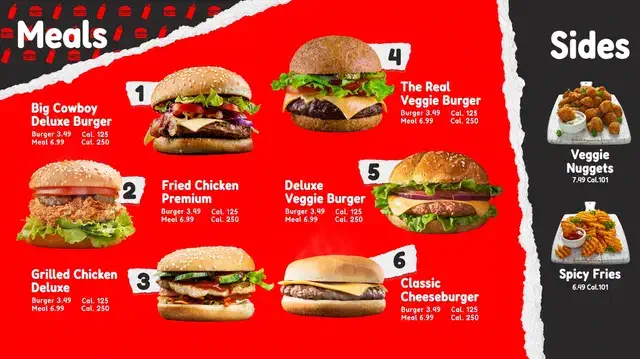
Digital Menus
Transform your Phoenix restaurant or café with dynamic menu boards.
✓ Update pricing instantly
✓ Reduce wait times
✓ Increase check averages
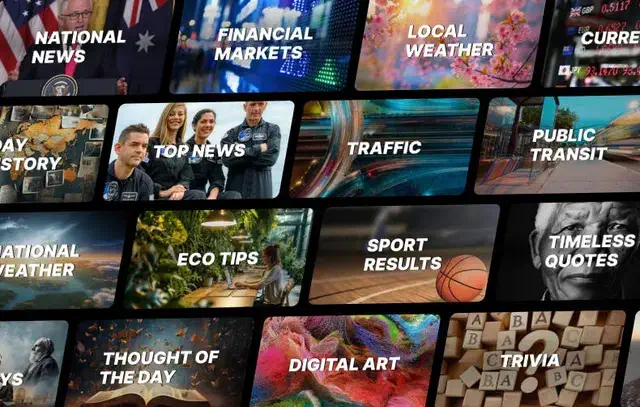
Info Displays
Information displays keep your space organized and standardize the experience across Arizona and any of your other locations.
✓ Wayfinding digital screens
✓ Emergency alerts
✓ Visitor management

Art Displays
Stand out with incredible showcases of rotating artwork or a digital marquee.
✓ Rotating galleries
✓ Branded content
✓ Atmosphere
Hardware & Software
Features
Synced Playback
Conditional Displays
Publish Date Control
Bulk Screen Setup
Preset Configurations
Auto-Dimming Timers
Proactive Alerts
Energy Use Monitors
What We Help With:
We help at every stage, at no extra cost. Let us know what you need and we’ll walk you through the rest. It doesn’t matter if you’re a small or enterprise size business, we partner with a large range of companies.
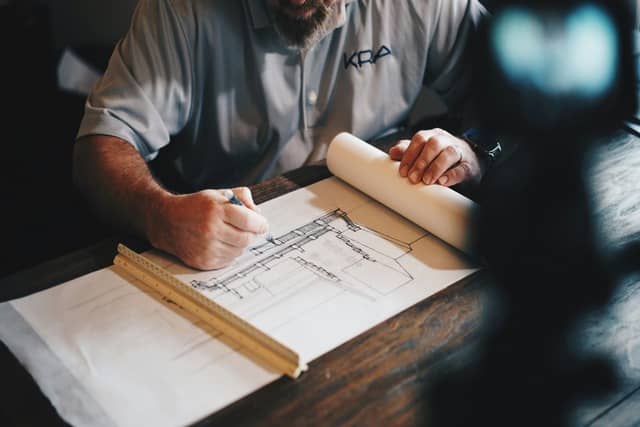
Planning
Purchasing
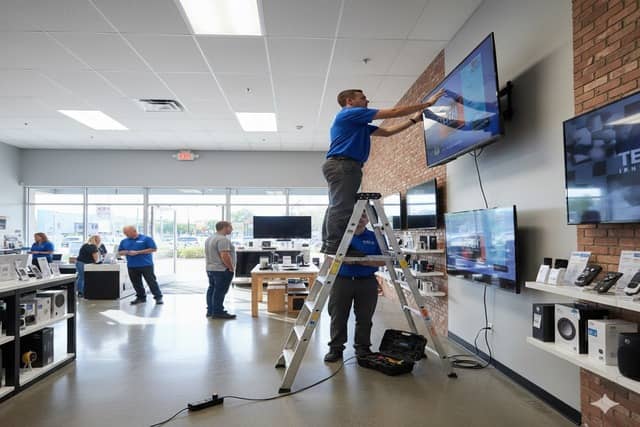
Installation
Retirement community businesses face unique communication challenges. Snowbirds arrive in October and leave in April, creating dramatic seasonal shifts in customer volume and preferences. Restaurants near Sun City adjust content between summer months serving year-round residents and winter season targeting visitors with different spending habits and dietary needs. The ability to schedule content changeovers prevents manually updating displays twice annually.
Healthcare facilities dominate the Valley with Banner, HonorHealth, and Dignity operating dozens of locations across Maricopa County. Patient wayfinding becomes critical when campuses span multiple buildings connected by outdoor walkways – something less common in cities where weather allows enclosed connections. Approximately 65% of hospital visitor complaints relate to difficulty finding departments or parking, problems digital wayfinding addresses directly.
Frequently Asked Questions (FAQ)
What is digital signage?
Digital signage is a screen that displays dynamic content instead of static printed signs. They are digital signs where you control what appears on the screen remotely through software, so you can update pricing, promotions, announcements, or visuals without printing anything or physically visiting the location. Common uses include restaurant digital menus, retail advert displays, lobby directories, and corporate communication screens.
How much do business displays cost?
It varies wildly depending on your needs, which is why we must do a consultation first. For Samsung commercial displays, expect $1,000 to $3,000 per screen depending on size and model. A 65″ QB series (350 nit, 16/7 rated) runs around $1,100 to $1,300. A 65″ QH series (700 nit, 24/7 rated) runs $1,700 to $2,000. Installation adds $200 to $400 per screen. Content management software like Samsung VXT starts at $10 per screen per month ($120 annually) for the S Series. Total cost for a single-screen setup typically ranges from $1,500 to $4,000. Our consulting and planning services are free. You only pay for hardware and installation.
Do I need a separate media player?
No. Samsung’s commercial displays have built-in Tizen processors that run content directly on the screen. You upload content through cloud software and the screen handles playback. This eliminates the need for external computers, media boxes, or USB drives. It also means fewer cables and fewer points of failure.
How long does installation take?
Typically 2 to 3 hours per screen. This includes mounting the display, running power, connecting to WiFi, configuring the software, and loading initial content. Multi-screen installations or complex setups like video walls take longer.
Can I update content myself?
Yes. Samsung VXT and similar platforms let you log in from any computer or phone to change what’s on screen. You can update text, swap images, adjust schedules, or push new content to multiple locations simultaneously. No technical expertise required. Most updates take less than five minutes. VXT is currently considered to be one of the best digital signage software in 2025/2026.
What's Samsung VXT?
Samsung VXT is Samsung’s cloud-based content management software. It lets you create, schedule, and deploy content to your displays from anywhere. Features include drag-and-drop content creation, automated scheduling, remote monitoring, and analytics on what content plays when. It integrates directly with Samsung’s commercial displays and requires no additional hardware.
What's the difference between a commercial display and a regular TV?
Commercial displays are built for extended operation (16+ hours daily), have higher brightness (350 to 500+ nits versus 200 to 300 nits for consumer TVs), include built-in content management, have no visible branding on the bezel, and carry commercial warranties. Consumer TVs are designed for 4 to 6 hours of daily home use and will fail quickly in commercial settings.
Do you service areas outside Phoenix?
Yes. We install and support digital signage projects throughout North America. However, we have centralized support in specific cities around the US, like Phoenix.
A gym chain with seven Phoenix metro locations realized their class schedules were meaningless. Posted schedules showed what classes existed, but members needed to know which classes had available spots versus being at capacity. Members wasted time walking to full classes or skipping sessions assuming they’d be crowded when spots were actually available.
Real-time occupancy displays now sit outside each studio showing current class capacity with visual indicators – green for plenty of space, yellow for filling up, red for at capacity. Members make informed decisions about joining current classes or waiting for the next session. The displays pull attendance data directly from their check-in system, requiring no manual updates from staff.
Class attendance distribution improved as members spread across available sessions instead of clustering in perceived “popular” time slots. The gyms eliminated the awkward situation where instructors had to turn away members at the door for overcrowded classes. Staff discovered they could adjust staffing levels more accurately by tracking which time slots consistently showed high demand versus those that rarely filled, optimizing instructor scheduling across the seven locations.