
Business Technology Advisors
Digital Signage in Tampa, FL.
Hillsborough County’s cruise port operations and Amalie Arena event traffic create unpredictable customer flow patterns for Tampa businesses. Restaurants near Channelside adjust digital menu boards based on whether cruise ships are departing, hockey games are scheduled, or convention groups are downtown. Hotel digital signage provides departure information, shuttle schedules, and local attraction details that change based on which events draw visitors to the city on any given week.
Corporate digital signage serves financial services, insurance companies, and healthcare networks throughout Westshore and beyond. Retail operations use cloud-based digital signage to manage promotional content across Tampa, Brandon, and Carrollton locations from single dashboards. Florida’s humidity and afternoon thunderstorms make commercial-grade equipment important for reliability in Gulf Coast conditions.
We Service
Retail Restaurants Hospitality Corporate Offices Healthcare Banking Schools Government

Digital Menus
Transform your Tampa restaurant or café with dynamic menu boards.
✓ Update pricing instantly
✓ Reduce wait times
✓ Increase check averages
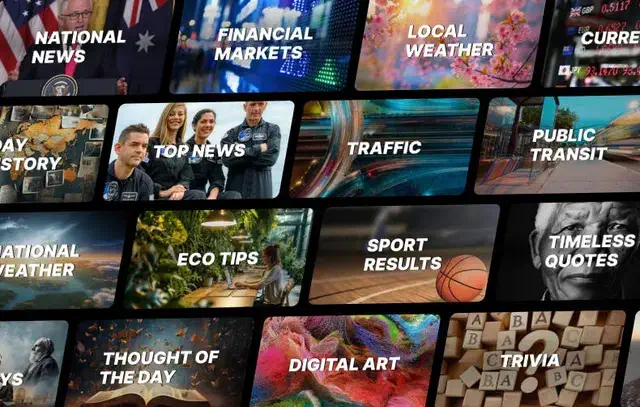
Info Displays
Information displays keep your space organized and standardize the experience across Florida and any of your other locations.
✓ Wayfinding digital screens
✓ Emergency alerts
✓ Visitor management

Art Displays
Stand out with incredible showcases of rotating artwork or a digital marquee.
✓ Rotating galleries
✓ Branded content
✓ Atmosphere
Hardware & Software
Features
Synced Playback
Conditional Displays
Publish Date Control
Bulk Screen Setup
Preset Configurations
Auto-Dimming Timers
Proactive Alerts
Energy Use Monitors
What We Help With:
We help at every stage, at no extra cost. Let us know what you need and we’ll walk you through the rest. It doesn’t matter if you’re a small or enterprise size business, we partner with a large range of companies.

Planning
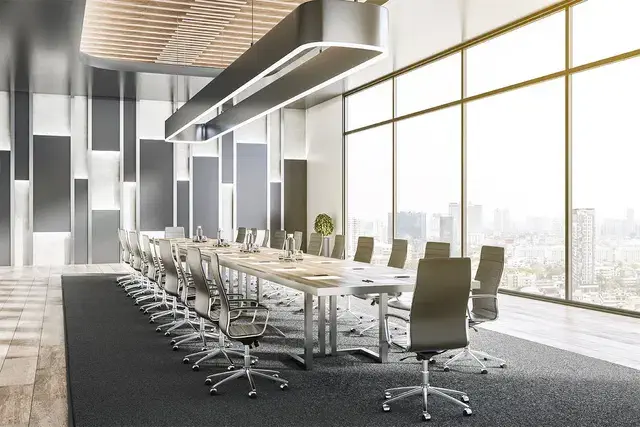
Purchasing
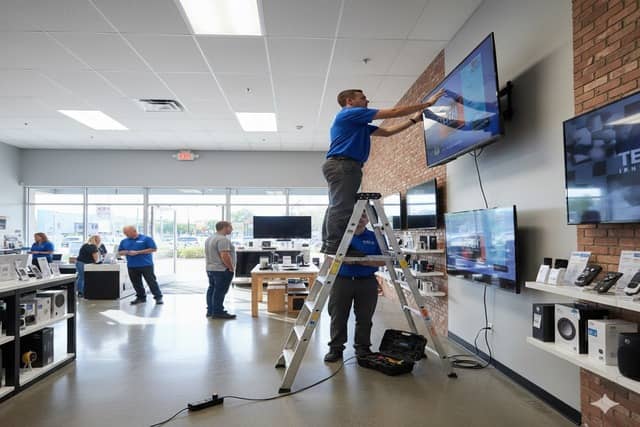
Installation
Tampa businesses discovered digital signage solves a specific problem: reaching customers who won’t read printed materials or check websites before visiting. Airport hotels update flight delay information and shuttle timing without guests asking front desk staff. Medical offices display wait time estimates that adjust as patient flow changes throughout the day. Restaurant digital signage switches between lunch and dinner pricing automatically at predetermined times.
The TV content management system works through web browsers without specialized software or technical training. Upload new content, set display schedules, select which locations see which messages. Samsung QH series with 700 nit brightness handles spaces with bright Florida sunlight exposure while QB series works for interior locations with controlled lighting.
Frequently Asked Questions (FAQ)
What is digital signage?
Digital signage is a screen that displays dynamic content instead of static printed signs. They are digital signs where you control what appears on the screen remotely through software, so you can update pricing, promotions, announcements, or visuals without printing anything or physically visiting the location. Common uses include restaurant digital menus, retail advert displays, lobby directories, and corporate communication screens.
How much do business displays cost?
It varies wildly depending on your needs, which is why we must do a consultation first. For Samsung commercial displays, expect $1,000 to $3,000 per screen depending on size and model. A 65″ QB series (350 nit, 16/7 rated) runs around $1,100 to $1,300. A 65″ QH series (700 nit, 24/7 rated) runs $1,700 to $2,000. Installation adds $200 to $400 per screen. Content management software like Samsung VXT starts at $10 per screen per month ($120 annually) for the S Series. Total cost for a single-screen setup typically ranges from $1,500 to $4,000. Our consulting and planning services are free. You only pay for hardware and installation.
Do I need a separate media player?
No. Samsung’s commercial displays have built-in Tizen processors that run content directly on the screen. You upload content through cloud software and the screen handles playback. This eliminates the need for external computers, media boxes, or USB drives. It also means fewer cables and fewer points of failure.
How long does installation take?
Typically 2 to 3 hours per screen. This includes mounting the display, running power, connecting to WiFi, configuring the software, and loading initial content. Multi-screen installations or complex setups like video walls take longer.
Can I update content myself?
Yes. Samsung VXT and similar platforms let you log in from any computer or phone to change what’s on screen. You can update text, swap images, adjust schedules, or push new content to multiple locations simultaneously. No technical expertise required. Most updates take less than five minutes. VXT is currently considered to be one of the best digital signage software in 2025/2026.
What's Samsung VXT?
Samsung VXT is Samsung’s cloud-based content management software. It lets you create, schedule, and deploy content to your displays from anywhere. Features include drag-and-drop content creation, automated scheduling, remote monitoring, and analytics on what content plays when. It integrates directly with Samsung’s commercial displays and requires no additional hardware.
What's the difference between a commercial display and a regular TV?
Commercial displays are built for extended operation (16+ hours daily), have higher brightness (350 to 500+ nits versus 200 to 300 nits for consumer TVs), include built-in content management, have no visible branding on the bezel, and carry commercial warranties. Consumer TVs are designed for 4 to 6 hours of daily home use and will fail quickly in commercial settings.
Do you service areas outside Tampa?
Yes. We install and support digital signage projects throughout North America. However, we have centralized support in specific cities around the US, like Tampa.
A physical therapy clinic with three Tampa area locations struggled with patient adherence to home exercise programs. Therapists spent session time explaining exercises verbally and providing printed handouts, but patients frequently forgot proper form or lost the materials. This slowed recovery progress and required additional appointments to re-teach exercises, frustrating both patients and staff.
Digital displays in treatment areas now show video demonstrations of common exercises on rotation. When therapists assign home programs, they direct patients to watch the relevant videos during their session. Patients can scan QR codes to access the same videos at home. The system eliminated most printed handout costs while providing clearer instruction than static images ever achieved.
Therapists report patients return for follow-up appointments with better understanding of proper exercise form. The clinic tracks this through fewer corrective sessions needed when patients demonstrate exercises incorrectly. They’ve expanded the system to show educational content about injury prevention and treatment approaches during patient wait times in reception areas.