
Business Technology Advisors
Digital Signage in San Jose, CA.
Santa Clara County’s Silicon Valley headquarters use corporate digital signage differently than most markets. Tech companies expect displays that integrate with existing data systems, show real-time metrics, and function as extensions of their engineering-driven culture rather than basic announcement boards. Restaurant digital signage throughout downtown and Santana Row handles diverse customer bases from tech workers grabbing quick lunches to evening dining crowds.
Digital signage solutions serve companies ranging from Fortune 500 headquarters to startups in coworking spaces across San Jose, Milpitas, and Campbell. Samsung’s QB series at 350 nit brightness works for most office environments, while QH series provides 700 nit brightness for lobbies with extensive glass architecture common in modern tech campuses. Retail digital signage coordinates messaging across Santa Clara County’s shopping districts and neighborhood commercial areas.
We Service
Retail Restaurants Hospitality Corporate Offices Healthcare Banking Schools Government

Digital Menus
Transform your San Jose restaurant or café with dynamic menu boards.
✓ Update pricing instantly
✓ Reduce wait times
✓ Increase check averages
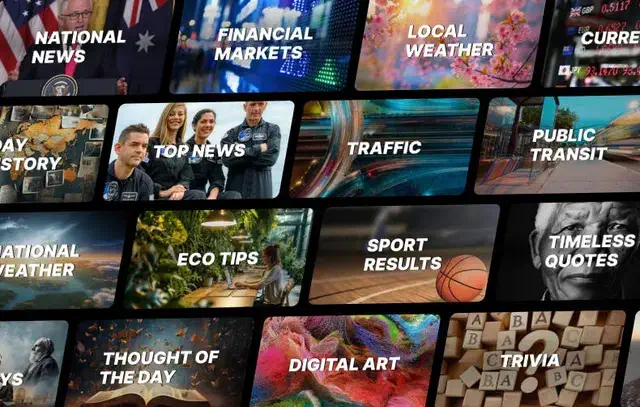
Info Displays
Information displays keep your space organized and standardize the experience across California and any of your other locations.
✓ Wayfinding digital screens
✓ Emergency alerts
✓ Visitor management

Art Displays
Stand out with incredible showcases of rotating artwork or a digital marquee.
✓ Rotating galleries
✓ Branded content
✓ Atmosphere
Hardware & Software
Features
Synced Playback
Conditional Displays
Publish Date Control
Bulk Screen Setup
Preset Configurations
Auto-Dimming Timers
Proactive Alerts
Energy Use Monitors
What We Help With:
We help at every stage, at no extra cost. Let us know what you need and we’ll walk you through the rest. It doesn’t matter if you’re a small or enterprise size business, we partner with a large range of companies.
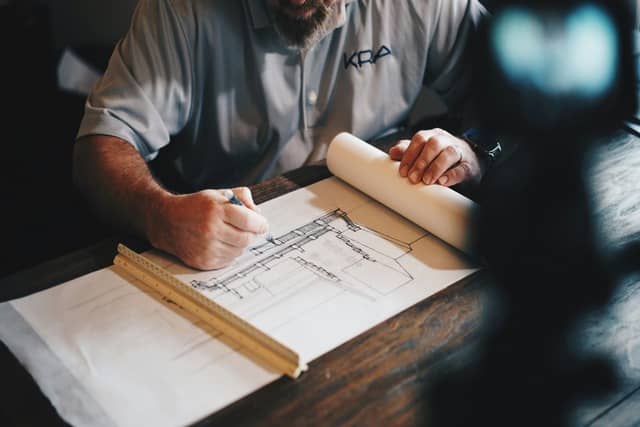
Planning
Purchasing
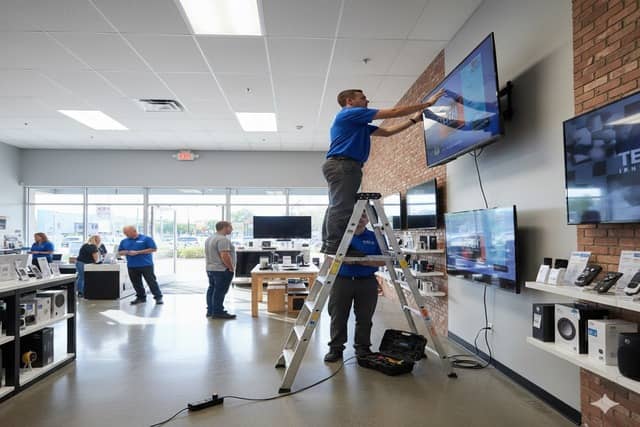
Installation
Cloud-based digital signage platforms appeal to San Jose businesses familiar with SaaS models and API integrations. Tech companies often connect displays to internal dashboards, project management tools, and data visualization systems rather than just showing static announcements. The content management system approach allows engineering teams to automate content updates based on data feeds and triggers.
Best digital signage for small business focuses on straightforward implementation, but Silicon Valley startups often want customization capabilities and integration options that consumer-grade systems can’t provide. Commercial displays include warranty coverage and service support throughout the Bay Area, though many San Jose tech companies maintain their own hardware internally.
Frequently Asked Questions (FAQ)
What is digital signage?
Digital signage is a screen that displays dynamic content instead of static printed signs. They are digital signs where you control what appears on the screen remotely through software, so you can update pricing, promotions, announcements, or visuals without printing anything or physically visiting the location. Common uses include restaurant digital menus, retail advert displays, lobby directories, and corporate communication screens.
How much do business displays cost?
It varies wildly depending on your needs, which is why we must do a consultation first. For Samsung commercial displays, expect $1,000 to $3,000 per screen depending on size and model. A 65″ QB series (350 nit, 16/7 rated) runs around $1,100 to $1,300. A 65″ QH series (700 nit, 24/7 rated) runs $1,700 to $2,000. Installation adds $200 to $400 per screen. Content management software like Samsung VXT starts at $10 per screen per month ($120 annually) for the S Series. Total cost for a single-screen setup typically ranges from $1,500 to $4,000. Our consulting and planning services are free. You only pay for hardware and installation.
Do I need a separate media player?
No. Samsung’s commercial displays have built-in Tizen processors that run content directly on the screen. You upload content through cloud software and the screen handles playback. This eliminates the need for external computers, media boxes, or USB drives. It also means fewer cables and fewer points of failure.
How long does installation take?
Typically 2 to 3 hours per screen. This includes mounting the display, running power, connecting to WiFi, configuring the software, and loading initial content. Multi-screen installations or complex setups like video walls take longer.
Can I update content myself?
Yes. Samsung VXT and similar platforms let you log in from any computer or phone to change what’s on screen. You can update text, swap images, adjust schedules, or push new content to multiple locations simultaneously. No technical expertise required. Most updates take less than five minutes. VXT is currently considered to be one of the best digital signage software in 2025/2026.
What's Samsung VXT?
Samsung VXT is Samsung’s cloud-based content management software. It lets you create, schedule, and deploy content to your displays from anywhere. Features include drag-and-drop content creation, automated scheduling, remote monitoring, and analytics on what content plays when. It integrates directly with Samsung’s commercial displays and requires no additional hardware.
What's the difference between a commercial display and a regular TV?
Commercial displays are built for extended operation (16+ hours daily), have higher brightness (350 to 500+ nits versus 200 to 300 nits for consumer TVs), include built-in content management, have no visible branding on the bezel, and carry commercial warranties. Consumer TVs are designed for 4 to 6 hours of daily home use and will fail quickly in commercial settings.
Do you service areas outside San Jose?
Yes. We install and support digital signage projects throughout North America. However, we have centralized support in specific cities around the US, like San Jose.
A software company in North San Jose wanted to improve transparency around product development progress for their 200+ employee team spread across multiple floors. Engineering teams worked in relative isolation, and most employees had little visibility into what other departments were building or when releases were planned. This created misalignment between sales, engineering, and customer success teams.
Digital displays installed in common areas, break rooms, and main hallways now show real-time sprint progress, upcoming release timelines, and feature development status pulled directly from their project management system. Engineers configured the integration themselves using the platform’s API, customizing exactly which metrics appear on which screens.
Cross-departmental awareness improved noticeably. Sales teams know what’s actually shipping next quarter rather than relying on outdated roadmaps. Customer success can see bug fix progress and share realistic timelines with clients. The company reports better internal alignment and fewer meetings spent getting different teams on the same page about product status.