
Business Technology Advisors
Digital Signage in Kansas City, MO.
Jackson County’s central US location makes it a distribution hub where logistics companies, food processing operations, and regional headquarters need real-time visual communication systems that keep pace with operational demands.
Restaurant groups throughout Kansas City’s renowned BBQ and dining scene use digital menu boards that adjust pricing and offerings throughout service periods. Distribution facilities coordinate shipping information across warehouse teams. Corporate offices from downtown to the Country Club Plaza manage internal communications and visitor information through networked display systems.
Samsung’s commercial technology handles these varied requirements through different brightness and operational ratings. Food service operations choose 700 nit displays for continuous operation. Corporate environments use 350 nit models during standard business hours. Screen dimensions range from compact 43″ installations to expansive 85″+ warehouse displays.
We Service
Retail Restaurants Hospitality Corporate Offices Healthcare Banking Schools Government
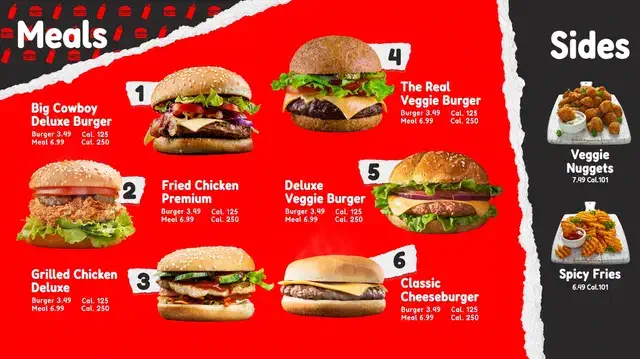
Digital Menus
Transform your Kansas City restaurant or café with dynamic menu boards.
✓ Update pricing instantly
✓ Reduce wait times
✓ Increase check averages
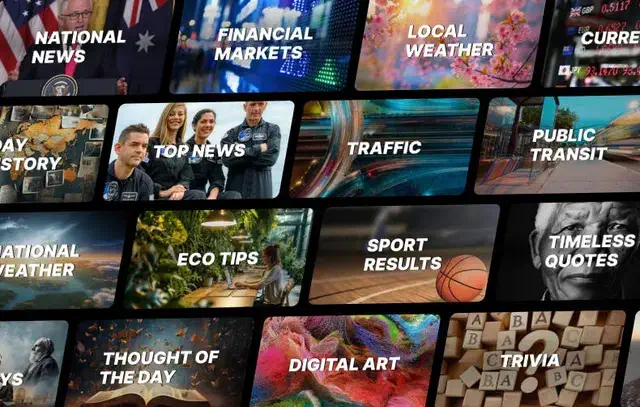
Info Displays
Information displays keep your space organized and standardize the experience across Missouri and any of your other locations.
✓ Wayfinding digital screens
✓ Emergency alerts
✓ Visitor management

Art Displays
Stand out with incredible showcases of rotating artwork or a digital marquee.
✓ Rotating galleries
✓ Branded content
✓ Atmosphere
Hardware & Software
Features
Synced Playback
Conditional Displays
Publish Date Control
Bulk Screen Setup
Preset Configurations
Auto-Dimming Timers
Proactive Alerts
Energy Use Monitors
What We Help With:
We help at every stage, at no extra cost. Let us know what you need and we’ll walk you through the rest. It doesn’t matter if you’re a small or enterprise size business, we partner with a large range of companies.

Planning
Purchasing
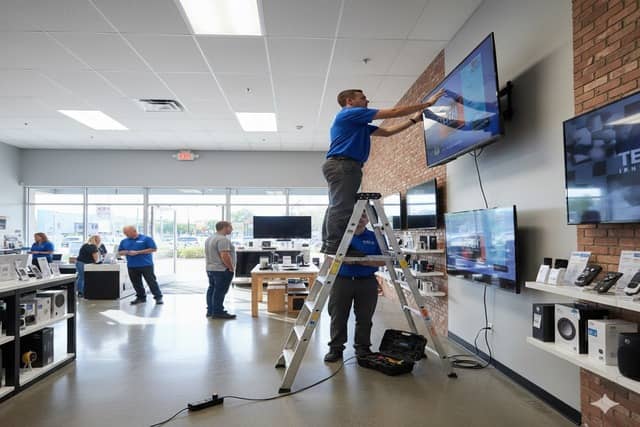
Installation
Distribution operations display shipping schedules, dock assignments, and inventory alerts across warehouse floors where teams work at considerable distances from each other. Restaurant operators update menu content from single dashboards controlling multiple Kansas City locations. Healthcare facilities coordinate patient information between Kansas and Missouri facilities.
Corporate offices in the Power and Light District push company-wide announcements to departmental screens without IT department involvement. The cloud-based platforms work through existing wireless infrastructure rather than requiring dedicated network builds.
Regional service coverage includes both Kansas and Missouri sides of the metro area.
Frequently Asked Questions (FAQ)
What is digital signage?
Digital signage is a screen that displays dynamic content instead of static printed signs. They are digital signs where you control what appears on the screen remotely through software, so you can update pricing, promotions, announcements, or visuals without printing anything or physically visiting the location. Common uses include restaurant digital menus, retail advert displays, lobby directories, and corporate communication screens.
How much do business displays cost?
It varies wildly depending on your needs, which is why we must do a consultation first. For Samsung commercial displays, expect $1,000 to $3,000 per screen depending on size and model. A 65″ QB series (350 nit, 16/7 rated) runs around $1,100 to $1,300. A 65″ QH series (700 nit, 24/7 rated) runs $1,700 to $2,000. Installation adds $200 to $400 per screen. Content management software like Samsung VXT starts at $10 per screen per month ($120 annually) for the S Series. Total cost for a single-screen setup typically ranges from $1,500 to $4,000. Our consulting and planning services are free. You only pay for hardware and installation.
Do I need a separate media player?
No. Samsung’s commercial displays have built-in Tizen processors that run content directly on the screen. You upload content through cloud software and the screen handles playback. This eliminates the need for external computers, media boxes, or USB drives. It also means fewer cables and fewer points of failure.
How long does installation take?
Typically 2 to 3 hours per screen. This includes mounting the display, running power, connecting to WiFi, configuring the software, and loading initial content. Multi-screen installations or complex setups like video walls take longer.
Can I update content myself?
Yes. Samsung VXT and similar platforms let you log in from any computer or phone to change what’s on screen. You can update text, swap images, adjust schedules, or push new content to multiple locations simultaneously. No technical expertise required. Most updates take less than five minutes. VXT is currently considered to be one of the best digital signage software in 2025/2026.
What's Samsung VXT?
Samsung VXT is Samsung’s cloud-based content management software. It lets you create, schedule, and deploy content to your displays from anywhere. Features include drag-and-drop content creation, automated scheduling, remote monitoring, and analytics on what content plays when. It integrates directly with Samsung’s commercial displays and requires no additional hardware.
What's the difference between a commercial display and a regular TV?
Commercial displays are built for extended operation (16+ hours daily), have higher brightness (350 to 500+ nits versus 200 to 300 nits for consumer TVs), include built-in content management, have no visible branding on the bezel, and carry commercial warranties. Consumer TVs are designed for 4 to 6 hours of daily home use and will fail quickly in commercial settings.
Do you service areas outside Kansas City?
Yes. We install and support digital signage projects throughout North America. However, we have centralized support in specific cities around the US, like Kansas City.
A food processing facility in North Kansas City needed better shift communication for workers entering the production floor. Verbal briefings at shift changes meant information reached different workers at different times, and language barriers with their diverse workforce created additional complications.
They positioned three Samsung QB70C displays at entrances where all workers pass when clocking in. The 70″ screens provide visibility from entry points through break areas.
Production managers now display shift priorities, equipment status, and safety reminders in both English and Spanish. Workers see current information before starting their shifts rather than relying on verbal communication that varies by supervisor.