
Business Technology Advisors
Digital Signage in Tucson, AZ.
Pima County businesses operate in desert conditions where equipment durability matters more than temperate climates. Commercial displays handle extreme temperature swings between air-conditioned interiors and loading docks where afternoon heat reaches triple digits. Restaurant digital signage throughout downtown and near the University of Arizona manages content for student populations, tourists visiting Saguaro National Park, and local residents with distinctly different preferences and spending patterns.
Healthcare facilities use indoor digital signage for patient navigation across medical campuses. Retail digital signage coordinates messaging for businesses serving both Tucson residents and winter visitors from colder states. Digital signs for schools help Tucson Unified and surrounding districts communicate with students and parents across extensive campuses where walking between buildings under desert sun makes printed bulletin boards impractical.
We Service
Retail Restaurants Hospitality Corporate Offices Healthcare Banking Schools Government

Digital Menus
Transform your Tucson restaurant or café with dynamic menu boards.
✓ Update pricing instantly
✓ Reduce wait times
✓ Increase check averages
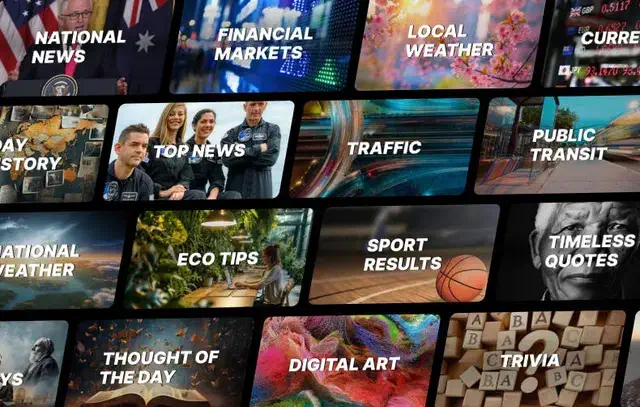
Info Displays
Information displays keep your space organized and standardize the experience across Arizona and any of your other locations.
✓ Wayfinding digital screens
✓ Emergency alerts
✓ Visitor management

Art Displays
Stand out with incredible showcases of rotating artwork or a digital marquee.
✓ Rotating galleries
✓ Branded content
✓ Atmosphere
Hardware & Software
Features
Synced Playback
Conditional Displays
Publish Date Control
Bulk Screen Setup
Preset Configurations
Auto-Dimming Timers
Proactive Alerts
Energy Use Monitors
What We Help With:
We help at every stage, at no extra cost. Let us know what you need and we’ll walk you through the rest. It doesn’t matter if you’re a small or enterprise size business, we partner with a large range of companies.

Planning
Purchasing
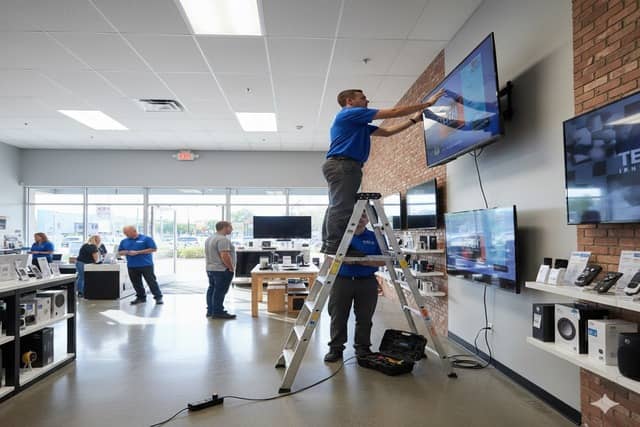
Installation
Digital signage solutions work particularly well for Tucson’s seasonal businesses that see dramatic customer volume changes between winter tourist season and summer months when temperatures keep visitors away. Hotels adjust content between promoting winter hiking and spring training baseball versus summer rates for heat-tolerant travelers. Restaurant operations modify menu presentations for snowbird populations versus local customer base throughout the year.
Best digital signage for small business means systems that work reliably without constant maintenance in Tucson’s dust and heat. Cloud-based digital signage platforms manage content remotely, which matters when business owners want to update displays without driving across the city in afternoon heat. Commercial-grade components include better dust protection and thermal management than consumer TVs designed for climate-controlled living rooms.
Frequently Asked Questions (FAQ)
What is digital signage?
Digital signage is a screen that displays dynamic content instead of static printed signs. They are digital signs where you control what appears on the screen remotely through software, so you can update pricing, promotions, announcements, or visuals without printing anything or physically visiting the location. Common uses include restaurant digital menus, retail advert displays, lobby directories, and corporate communication screens.
How much do business displays cost?
It varies wildly depending on your needs, which is why we must do a consultation first. For Samsung commercial displays, expect $1,000 to $3,000 per screen depending on size and model. A 65″ QB series (350 nit, 16/7 rated) runs around $1,100 to $1,300. A 65″ QH series (700 nit, 24/7 rated) runs $1,700 to $2,000. Installation adds $200 to $400 per screen. Content management software like Samsung VXT starts at $10 per screen per month ($120 annually) for the S Series. Total cost for a single-screen setup typically ranges from $1,500 to $4,000. Our consulting and planning services are free. You only pay for hardware and installation.
Do I need a separate media player?
No. Samsung’s commercial displays have built-in Tizen processors that run content directly on the screen. You upload content through cloud software and the screen handles playback. This eliminates the need for external computers, media boxes, or USB drives. It also means fewer cables and fewer points of failure.
How long does installation take?
Typically 2 to 3 hours per screen. This includes mounting the display, running power, connecting to WiFi, configuring the software, and loading initial content. Multi-screen installations or complex setups like video walls take longer.
Can I update content myself?
Yes. Samsung VXT and similar platforms let you log in from any computer or phone to change what’s on screen. You can update text, swap images, adjust schedules, or push new content to multiple locations simultaneously. No technical expertise required. Most updates take less than five minutes. VXT is currently considered to be one of the best digital signage software in 2025/2026.
What's Samsung VXT?
Samsung VXT is Samsung’s cloud-based content management software. It lets you create, schedule, and deploy content to your displays from anywhere. Features include drag-and-drop content creation, automated scheduling, remote monitoring, and analytics on what content plays when. It integrates directly with Samsung’s commercial displays and requires no additional hardware.
What's the difference between a commercial display and a regular TV?
Commercial displays are built for extended operation (16+ hours daily), have higher brightness (350 to 500+ nits versus 200 to 300 nits for consumer TVs), include built-in content management, have no visible branding on the bezel, and carry commercial warranties. Consumer TVs are designed for 4 to 6 hours of daily home use and will fail quickly in commercial settings.
Do you service areas outside Tucson?
Yes. We install and support digital signage projects throughout North America. However, we have centralized support in specific cities around the US, like Tucson.
A veterinary clinic in northwest Tucson faced constant questions from pet owners about vaccine schedules, preventive care recommendations, and available services beyond basic checkups. Veterinarians and techs spent valuable appointment time explaining routine information that every pet owner needed to know, reducing time available for actual medical assessment and treatment. The clinic’s printed brochures sat untouched in the waiting room.
Digital displays in exam rooms and the waiting area now show rotating content about vaccine schedules for different pet ages, parasite prevention specific to Southern Arizona, and available services like dental care and nutrition counseling. Veterinarians reference the displays during appointments when discussing preventive care, and pet owners actually watch the content while waiting since it’s more engaging than static posters.
Appointment efficiency improved as veterinarians spend less time on routine education already covered by display content. The clinic reports increased uptake of preventive services like dental cleanings because pet owners see the information multiple times during visits rather than hearing it once and forgetting. They’ve added seasonal content about heat safety and monsoon preparedness that’s relevant to Tucson pet owners during specific times of year.